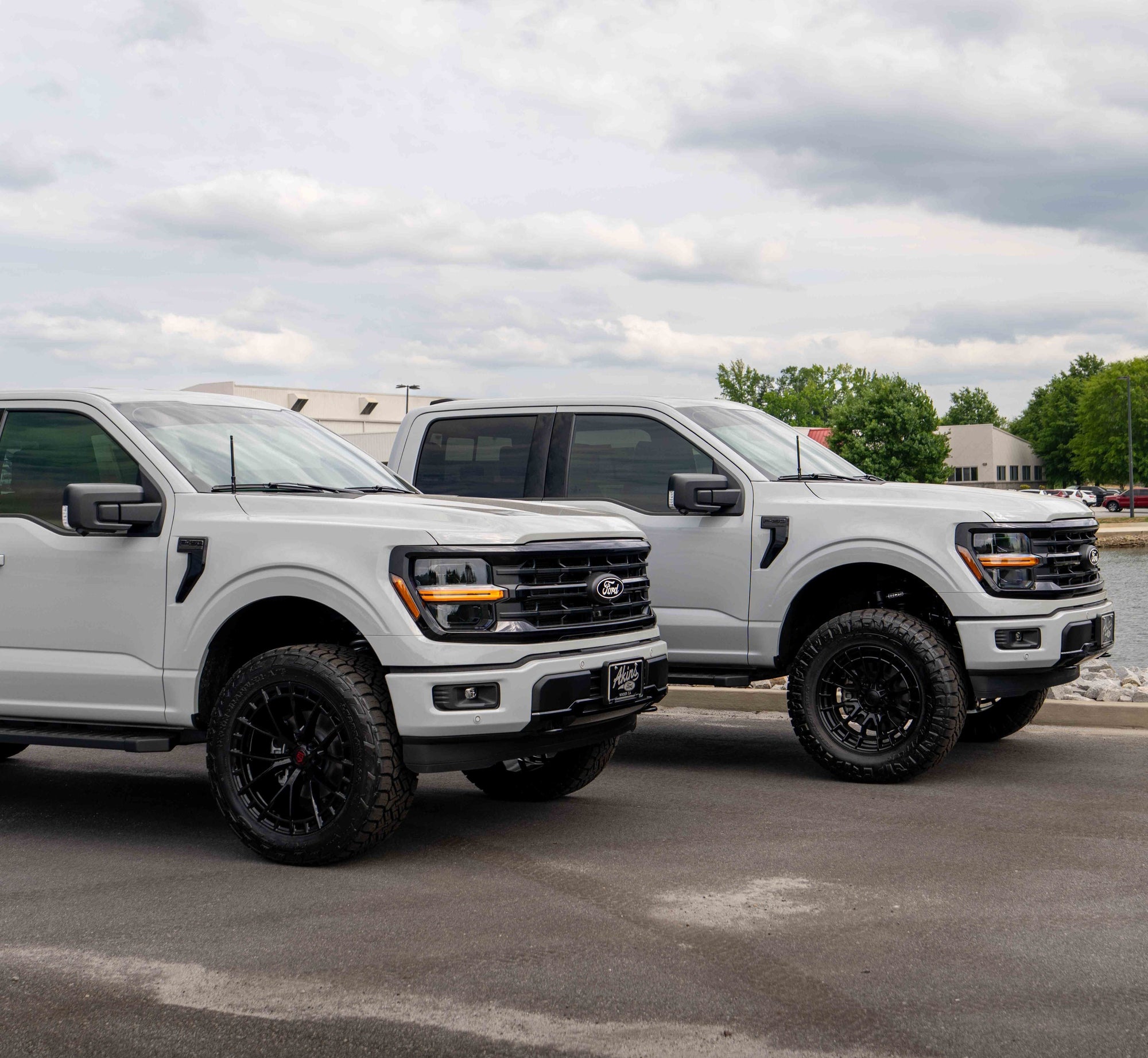

Wild Willies Signature Builds · Overlanding & Off-Road Guide
Build Your Dream
Overlanding Rig
Everything you need to know — from platform to trail.
What Is Overlanding?
Overlanding is self-reliant, vehicle-based travel to remote destinations — where the journey itself is the point. It is not just off-roading, and it is nothing like pulling a 40-foot fifth wheel to a campground with hookups. Overlanding sits somewhere in between: you and your rig, carrying everything you need, going where paved roads do not.
The lifestyle has exploded in recent years, and for good reason. Instead of heavy, expensive RVs, today's overlanders are building capable 4x4 trucks and SUVs that double as daily drivers. Modular storage systems, compact rooftop tents, and lightweight camping gear have made it easier than ever to leave Friday afternoon and be deep in the mountains before dark. At Wild Willies in Winder, Georgia, we build these rigs every week — and we know exactly what it takes to go from stock to trail-ready.
Choosing Your Platform
Three vehicles dominate the overlanding world more than any others: the Ford Bronco, the Jeep Wrangler, and the Jeep Gladiator. All three have massive aftermarket support, proven off-road geometry, and the bones to handle a serious build. The right choice comes down to how you use it every day.
Ford Bronco
The sixth-generation Bronco (2021–present) was designed with overlanding in mind from day one. G.O.A.T. drive modes, a factory solid front axle option, and removable doors and roof make it one of the most purpose-built platforms on the market. Add a quality suspension lift, a set of 35s, and a steel front bumper, and you have a rig that handles the vast majority of North Georgia trails with confidence. The Bronco's aftermarket ecosystem is one of the fastest-growing in the industry — whatever you want to bolt on, it exists.
- Factory solid front axle (on select trims)
- Removable doors and roof for open-air trail driving
- G.O.A.T. terrain management modes
- Rapidly expanding aftermarket ecosystem
- Purpose-built for modification from the factory
Jeep Wrangler
The Wrangler is the original overlanding vehicle — and the JL generation (2018–present) is the best daily-driver Wrangler ever produced. Solid axles front and rear, legendary off-road geometry, and an aftermarket ecosystem built over decades mean the Wrangler is a canvas that has been proven everywhere from the Georgia mountains to the Rubicon Trail. The 4xe hybrid option adds a practical edge for overlanders who want to stretch fuel range on long trips without sacrificing capability.
- Solid front and rear axles standard
- Largest aftermarket ecosystem of any off-road vehicle
- Removable doors, roof, and windshield
- 4xe hybrid option for extended range
- Decades of proven off-road geometry
Jeep Gladiator
The Gladiator takes everything the Wrangler does well and adds a five-foot pickup bed — making it arguably the most versatile overlanding platform available today. You get the Wrangler's legendary off-road capability combined with actual truck utility. A full rooftop tent setup, a drawer system, fuel canisters, recovery gear, and a week's worth of food can all live in the bed without crowding the cab. For overlanders who want maximum capability and maximum cargo, the Gladiator is the answer.
- Five-foot truck bed plus Wrangler off-road DNA
- Solid axles front and rear
- Removable doors and roof like the Wrangler
- Bed accommodates full rooftop tent and drawer system
- Trail Rated from the factory on Rubicon trim
Must-Have Overlanding Accessories
All three platforms are capable stock — but capable and trail-ready are two different things. Here are the upgrades that make the biggest difference, in the order we typically recommend them.
Suspension Lift
Everything starts here. A quality suspension lift increases ground clearance, improves your approach and departure angles, and opens up room for larger tires. For most overlanders, a 2–4 inch lift from brands like Fabtech, BDS, or ReadyLift hits the sweet spot — enough to make a real difference on the trail without fighting the vehicle on the highway every day. A proper suspension install also keeps your geometry correct, your alignment holding, and your tires wearing evenly. This is not a step to shortcut.
Suspension Upgrades at Wild WilliesWheels & All-Terrain Tires
After suspension, nothing transforms a rig like the right rubber. All-terrain tires — a Toyo Open Country A/T or a Nitto Ridge Grappler — give you traction on loose dirt, rock, mud, and gravel while still riding comfortably on the highway. Pair them with a capable set of aftermarket wheels and you have a setup that looks as good leaving the trailhead as it does arriving at the office.
Shop Wheels & Tires at Wild WilliesHeavy-Duty Bumpers & Recovery Points
Factory bumpers are designed to crumple in a low-speed collision — not protect your vehicle on a trail. An aftermarket steel front bumper adds a winch mount, D-ring recovery points, and a dramatically better approach angle when the terrain gets steep. A rear bumper adds a spare tire carrier and additional recovery points. Add skid plates to protect your fuel tank, transfer case, and differential, and you have a rig that explores confidently rather than carefully.
Exterior Upgrades & Bumpers at Wild WilliesBed Racks & Rooftop Tents
A bed rack is the backbone of a truck overland setup — it creates a mounting platform for a rooftop tent, recovery boards like Maxtrax, an awning, a spare fuel canister, and anything else you want to carry above the bed. Rooftop tents have become the defining piece of gear for the overlanding lifestyle: they keep you off the ground, set up in minutes, and turn any campsite into a comfortable night's sleep. For Bronco and Wrangler builds, roof racks serve the same purpose — and the Gladiator's bed gives you even more real estate to work with.
Modular Storage Systems
One of the biggest shifts in overlanding right now is toward modular, adaptable storage rather than fixed custom setups. Slide-out drawer systems, interlocking cargo boxes, and in-cab organizers keep tools, cooking gear, and recovery equipment accessible without digging through everything you own at 9pm in the dark. If you are going to spend time in remote places, your storage system needs to be as intentional as every other part of the build.
Lighting Upgrades
A quality LED light bar, a set of ditch-mounted pod lights, and rear work lights from brands like Rigid Industries or Morimoto dramatically extend your capability after dark — whether you are navigating a tight forest road, setting up camp, or working on the vehicle. Good lighting is not just about looks. On a remote trail with no cell service, it is a safety essential.
Fuel, Water & Self-Sufficiency Gear
True overlanding means being self-contained. Mounted fuel canisters let you carry extra range on remote routes where gas stations can be 75 miles apart. A pressurized water tank gives you a camp shower and a drinking water backup. A portable power station keeps your phone, GPS, and camera charged off the grid. And as a certified YETI dealer, Wild Willies can outfit your rig with the best coolers in the business — because good food makes a great trip.
Build Levels
Not every overlanding build looks the same — and it should not. Here is how we think about the three stages of a build, and what each one gets you on the trail.
| Build Level | What's Included | Best For |
|---|---|---|
| The Weekend Warrior | Leveling kit or modest lift, A/T tires, basic lighting, bed liner & cargo organizer | Daily drivers who want trail capability on weekends |
| The Trail-Ready Build | 3–4" suspension lift, 35" tires, steel bumper with winch, rear bumper, bed rack, rooftop tent, lighting package | Enthusiasts who want to tackle 90% of North Georgia trails |
| The Full Expedition Rig | Long-travel suspension, 37–40" tires, full skid plates, locking diffs, modular storage, rooftop tent & awning, mounted fuel & water, onboard air, full lighting overhaul | Serious overlanders built for multi-day remote expeditions |
The Weekend Warrior is where most of our customers start — and a lot of them come back for more. The Trail-Ready Build is the sweet spot for the owner who wants a capable, head-turning rig that handles the vast majority of what North Georgia throws at it. The Full Expedition Rig is for the owner who wants to go anywhere, stay as long as they want, and need absolutely nothing from the outside world to do it.
Where to Take Your Build
One of the best things about building with Wild Willies in Winder, Georgia is what is waiting just up the road. You do not have to drive to Colorado to find world-class overland terrain. North Georgia and the greater Southeast are home to some of the most spectacular off-pavement routes in the country — and three of the best start right here in our backyard.
The Georgia Traverse
Considered the preeminent overland route of the American South, the Georgia Traverse is a 390-mile adventure that traces the northern edge of the state from the Georgia/South Carolina border all the way to the Georgia/Alabama border. Created by David Giguere of Georgia Overland, the route visits North Carolina and Tennessee along the way, passing through the Nantahala National Forest, the Chattahoochee-Oconee National Forest, and the legendary Cohutta Wilderness.
Of the 390 total miles, 226 are unpaved — a mixture of gravel, dirt, and forest service roads, with around 8–10 water crossings. The deepest crossing runs around 30 inches, so a proper lift and aired-down tires are a real advantage. The longest stretch without a fuel station is roughly 75 miles, which makes an auxiliary fuel setup more than worth it. Plan on 3–5 days to do it justice. Free GPX files are available at georgiaoverland.com.
The Georgia Adventure Trail (TheGAT)
If the Georgia Traverse is the definitive North Georgia route, the Georgia Adventure Trail is the full-state epic. Running 580+ miles from the Florida state line to the North Carolina border, the GAT covers all three of Georgia's major geographic regions: the flat, sandy pine forests of the South; the rolling, clay-road Piedmont in the center; and the mountainous Blue Ridge foothills in the North. Around 65 percent of the trail is off-pavement — a mix of dirt, gravel, clay, and sand depending on where you are.
Created by Tony of Vman1313 Adventures, the GAT is a different kind of challenge than the Traverse. It is longer, more varied, and designed to show you the full range of what Georgia looks like from behind the windshield of a capable 4x4. The northern section is the most technical, with mountainous dirt and gravel roads and massive boulders lining the Tallulah River corridor. The south opens into long sandy stretches through pine forests — a completely different kind of driving. GPX files and route info are available at vman1313.com.
The Big Frog Loop
If the Georgia Traverse is the bucket list route and the GAT is the full-state epic, the Big Frog Loop is the one you come back to again and again. This 95-mile loop winds through the dirt and gravel roads surrounding the Cohutta Wilderness in Fannin, Gilmer, and Murray Counties, crossing briefly into Tennessee's Big Frog Wilderness in Polk County. It is a concentrated dose of everything that makes North Georgia overlanding special — elevation change, forest canopy, creek crossings, wildlife, and some of the most scenic dispersed camping in the Southeast.
The loop takes you along roads like West Cowpen, where you climb nearly 2,000 feet in elevation through hardwood forest with sweeping views to the west, and Tumbling Creek Road, which drops into a laurel-lined creek corridor dotted with backcountry campsites. The iconic Jacks River Fields — a large open dispersed camping area near the southern edge of the Cohutta — is a favorite basecamp for groups. In dry conditions the loop is manageable for most capable vehicles. In wet conditions, high clearance and 4WD are non-negotiable. Many roads along the loop are closed January through March.
Frequently Asked Questions
Do I need a special vehicle to go overlanding?
Not necessarily, but a capable 4x4 with real ground clearance makes the experience dramatically better and opens up far more of the trail network. The Bronco, Wrangler, and Gladiator are purpose-built for this. A properly upfitted truck — F-250, Tacoma, or similar — works just as well on most routes.
How much lift do I actually need for overlanding?
For the majority of Georgia's forest roads and moderate trails, a 2–3 inch lift with a solid set of all-terrain tires gets you most of the way there. For the more technical sections of the Georgia Traverse or the Big Frog Loop, a full 4-inch suspension lift with 35-inch tires is the sweet spot. See our suspension options here.
What is the first thing I should add to my Bronco, Wrangler, or Gladiator for overlanding?
Suspension and tires, every time. Everything else — bumpers, racks, tents, storage — layers on top of a solid foundation. Get the lift and rubber right first and the rest of the build makes sense.
Is a rooftop tent worth it?
For most overlanders, yes. They set up in under two minutes, keep you off the ground away from bugs and moisture, and fold down tight against the rack when you are not using them. The trade-off is a slight increase in roof height and some wind noise on the highway. For the experience they deliver at camp, most owners say it is not close.
Can Wild Willies build a rig for the Georgia Traverse?
Absolutely. We build Traverse-ready rigs regularly — suspension, bumpers, tires, lighting, storage, and recovery gear all sorted in one build. Get a quote and tell us where you want to go.
Do you need a winch for overlanding in Georgia?
On the Georgia Traverse and the Big Frog Loop, a winch is strongly recommended — particularly for the water crossings and wet-weather sections. On easier forest roads and the southern sections of the GAT, you can get by without one. That said, a front bumper with a winch mount gives you the option without committing to the full setup from day one.
We'll Get You Trail-Ready.
You have the platform. You have the route picked out. Now let us put together a build that handles it. At Wild Willies in Winder, Georgia, we handle everything in-house — suspension, bumpers, wheels, tires, lighting, and every bolt in between. Ask us about our Mild to Wild™ packages, including the Covert™, Apex™, and Everest™ editions, built for exactly this kind of adventure.
There is a trail out there with your name on it. Let's build the rig to match.